If you’ve spent any time arranging or directing music for community groups, you’ve probably run into this problem:
You never get the same instrumentation twice.
One week it’s three flutes, a viola, and an enthusiastic clarinettist. The next week it’s a trumpet, two saxes, a ukulele, and someone who has just taken up the oboe.
Traditional scoring doesn’t cope well with this kind of glorious chaos.
Flexible ensembles do.
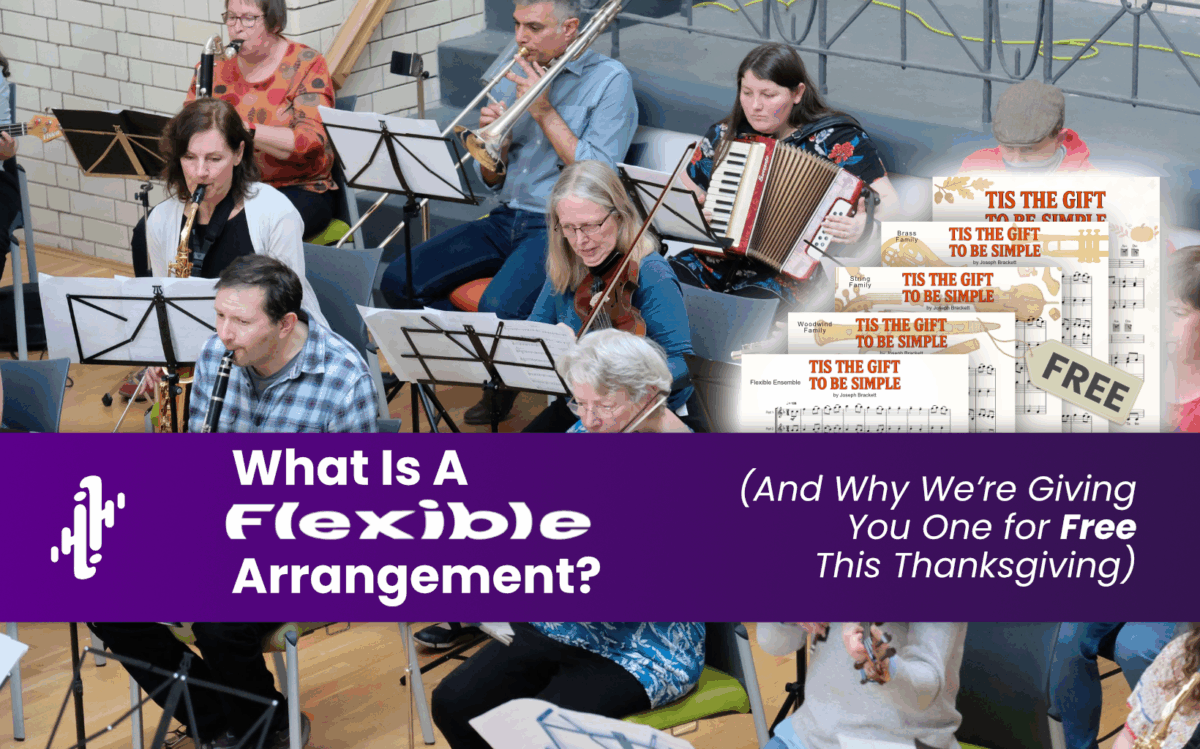
As part of our Thanksgiving giveaway this month, we’re sharing a brand-new flexible ensemble arrangement of ‘Tis The Gift To Be Simple—free to download, and playable by almost any combination of instruments. More on that below.
But first, if you’ve never worked with flexible scoring before, here’s what it is, why it’s increasingly popular, and how one UK music charity has built an entire community around it.
What Flexible Ensembles Actually Are
At the core of the format is a simple idea:
Each musical line is supplied in multiple transpositions and clefs so almost any instrument can play any part.
For example, Part 1 (usually the melody) might be available as:
- Treble C – flute, violin, oboe…
- Treble Bb – trumpet, clarinet, tenor sax…
- Treble Eb – alto sax…
- Bass clef – low brass, cello…
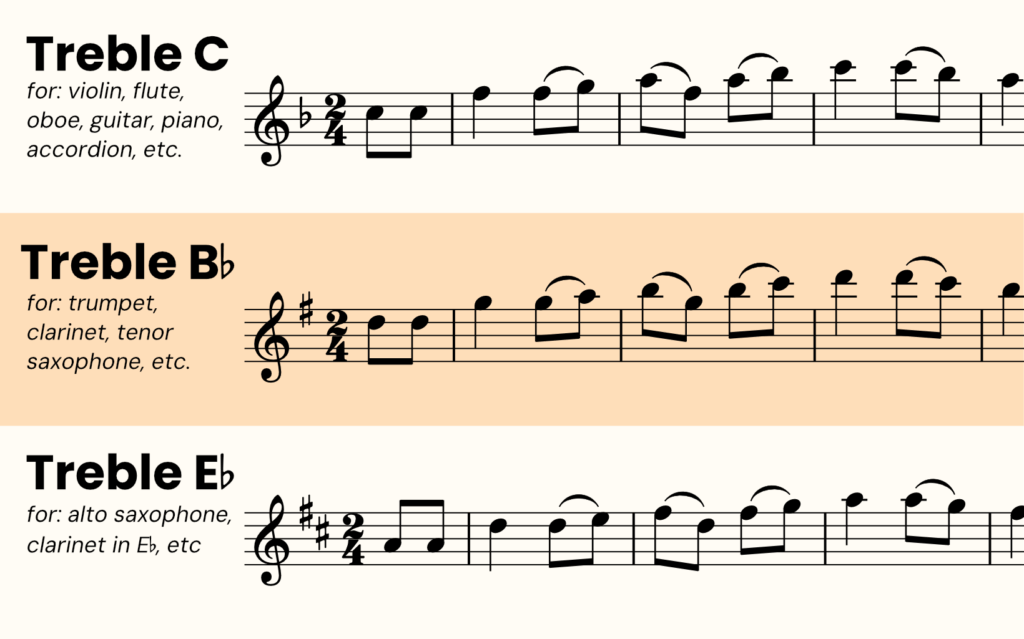
Multiply that across five parts (plus accompaniment), and you suddenly have a format that works whether you have five players or fifty—and no matter who walks through the door each week.
Why Flexible Ensembles Exist: Speed, Inclusion, and Real-World Practicality
When Reuben and Rob launched The Misfits Music Institute, they needed an ensemble format that didn’t require a perfectly balanced orchestra before they could start.
“We wanted to get an ensemble together quite quickly,” Reuben told us, “and a flexible ensemble format lets you invite any musician, with any instrument.”
It solves a problem many community directors face: you can’t choose who turns up. Rather than writing for a fixed lineup, flexible scoring turns that unpredictability into a feature.
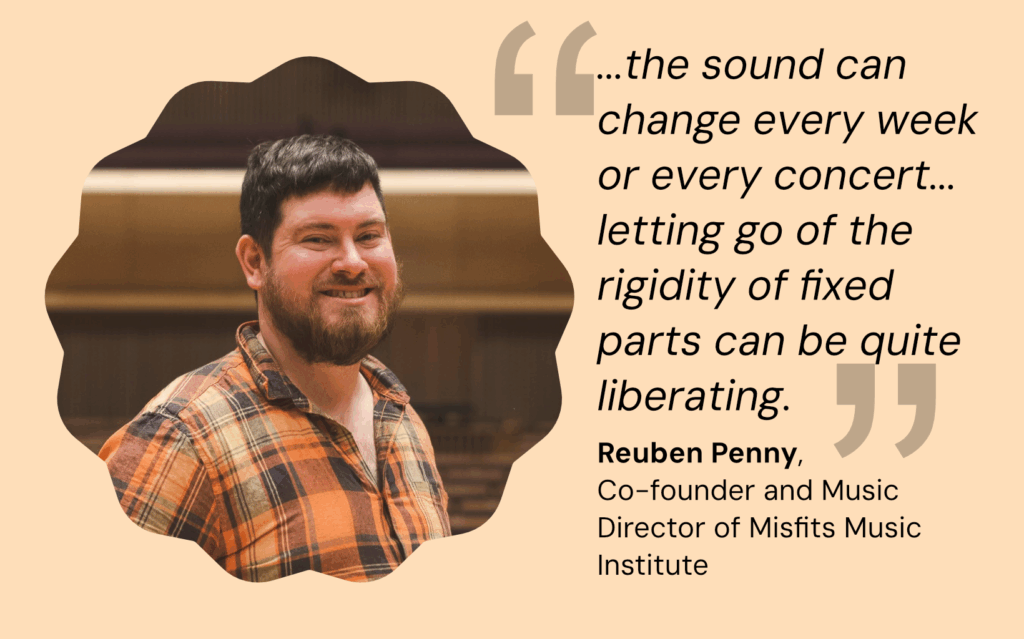
Reuben describes the weekly sound-world of a flexible ensemble as something to embrace:
“I have to accept that the sound can change every week or every concert—and I’ve grown to really enjoy that. Letting go of the rigidity of fixed parts can be quite liberating.”
For groups where the instrumentation ebbs and flows, flexible parts keep rehearsals meaningful and performances musically satisfying.
The Misfits’ Twist: Parts Written by Ability Level
Most flexible ensembles sort parts by register or musical role. The Misfits do something different—and really smart.
Their arrangements use three difficulty levels, not three pitch ranges:
- Part 1 – advanced players
- Part 2 – intermediate musicians
- Part 3 – beginners or returners

This lets beginners sit alongside professionals without anyone feeling out of place.
Over time, players often “graduate” between parts. Reuben described one member who joined late in life, confidently played Part 3, began taking lessons using Misfits material, moved into Part 2, and eventually into Part 1:
“It was inspiring to watch someone go from a mild interest to someone who practices regularly and plays in different ensembles. The format made that pathway possible.”
What You Gain (and What You Give Up)
Flexible ensembles work across almost any genre, but they naturally simplify textures.
Reuben puts it plainly: you’re not going to replicate every nuance of a sprawling orchestral score. However, that’s rarely the point.
“You’ll always lose some of the detail, but you can still capture the spirit—and you open the door for people to play music they might never otherwise get to play.”
And that is where the format shines: accessibility, creativity, and the thrill of hearing what a piece becomes when arranged for the musicians actually in the room.
Why Tis The Gift To Be Simple Works So Well in This Format
Folk music lives through variation—no two performances are the same—so flexible scoring feels completely natural here.
Reuben summed it up beautifully:
“Folk music is by nature quite flexible… having a flexible arrangement of it can be really exciting.”
If you’re directing a group, the best mindset is openness. Embrace unexpected colours, textures, and balances. They’re not flaws; they’re part of the charm.
Spotlight on The Misfits Music Institute
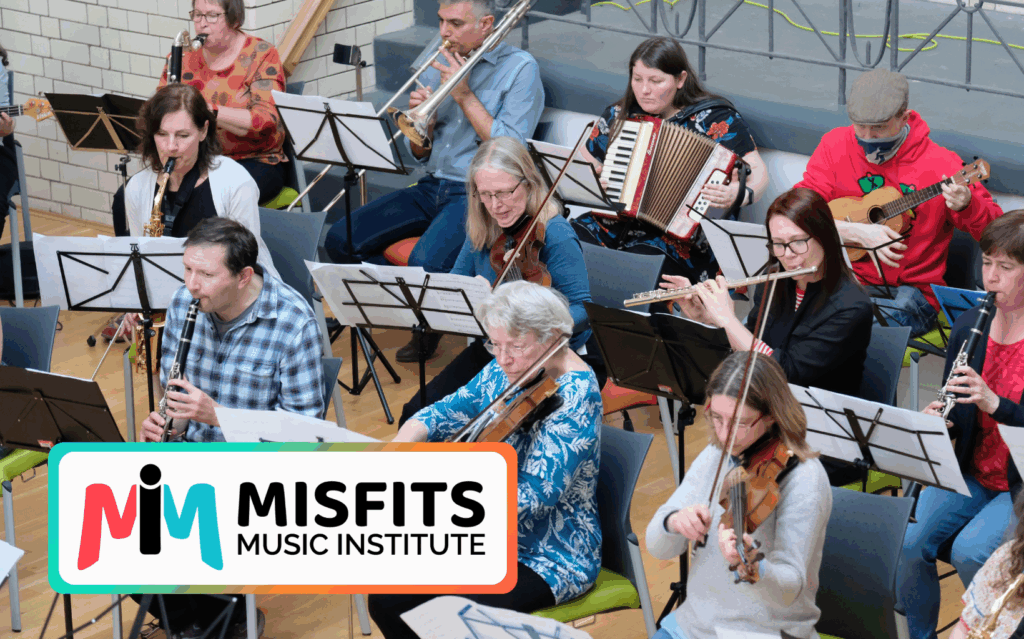
The Misfits Music Institute
South Birmingham & the Black Country, UK
The Misfits are a community music charity dedicated to bringing people together through accessible, joyful music-making. They’ve been active since 2018, and their message is simple:
“The music is secondary—as long as people are having fun and meeting new people, that’s what we aim to achieve.”
Their flexible ensemble model embodies that ethos, and we’re proud to highlight their work. Learn more at their website or social channels if you’d like to explore their projects or support their mission:
https://www.instagram.com/misfits_music_institute
Download Your Free Flexible Ensemble Arrangement
To celebrate Thanksgiving—and to follow up this month’s piano/vocal giveaway—we’ve created a flexible ensemble arrangement of ‘Tis The Gift To Be Simple, free for all Tunescribers customers.

It includes:
- 5 parts, each available in multiple transpositions and clefs
- An optional accompaniment part
- A format playable by almost any group—duets, bands, school ensembles, community groups, or mixed collections of whoever turns up on the day
👉 Download the arrangement here—free
Earn $25 in Tunescribers Reward Points

We’d love to hear what your version sounds like.
If you or your ensemble record themselves playing the arrangement—solo, duet, full flexible group, anything—and tag @tunescribers on social media, we’ll credit your account with:
🎁 $25 in Tunescribers reward points
(usable as credit on any future custom sheet music order)
Have fun with it, and feel free to experiment.
That’s the heart of flexible ensembles—and of ‘Tis The Gift To Be Simple itself.