Categories
Main

Free Sheet Music Giveaway, May 2024

Free Sheet Music Giveaway, May 2024

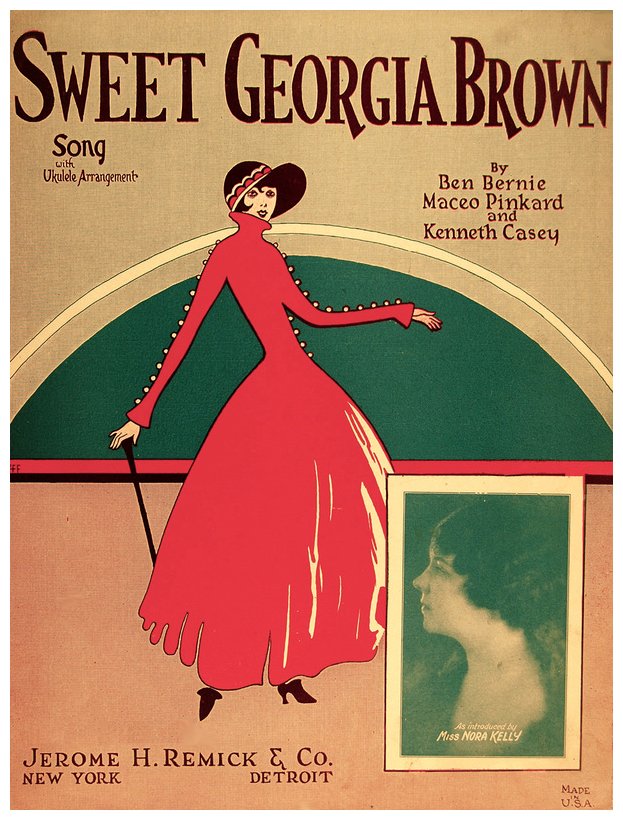
“Sweet Georgia Brown” by Ben Bernie, Maceo Pinkard, and Kenneth Casey (1925)

Best known as the Harlem Globetrotter’s theme song, “Sweet Georgia Brown” is a catchy and upbeat jazz standard. The lyrics, inspired by a real person named after the state of Georgia, tell the story of a woman who is admired wherever she goes.

Since its release in 1925, the song has been recorded by various artists, including Bing Crosby, Louie Armstrong, and Tony Sheridan. The most well-known version is the 1949 instrumental by Brother Bones and His Shadows, which features whistling and rhythm bones.

Typically sold for $15.99, the sheet music for “Sweet Georgia Brown” is yours FREE during May 2024. This version, arranged for piano and vocals, is based on this performance by Ella Fitzgerald and Duke Ellington. Grab your copy today!

Claim Free Sheet Music

"Sweet Georgia Brown" sheet music book

Fun Facts About “Sweet Georgia Brown”

  • In 1952, the Harlem Globetrotters basketball team made the 1949 Brother Bones version their official theme song.
  • The 1962 cover by Tony Sheridan features The Beatles as the backing band, who also recorded “Swanee River” in the same session.
  • Roberta Flack recorded the song in 1994, but with newly added lyrics to portray the character as “strong, sexy, and intelligent” rather than just an object of desire.

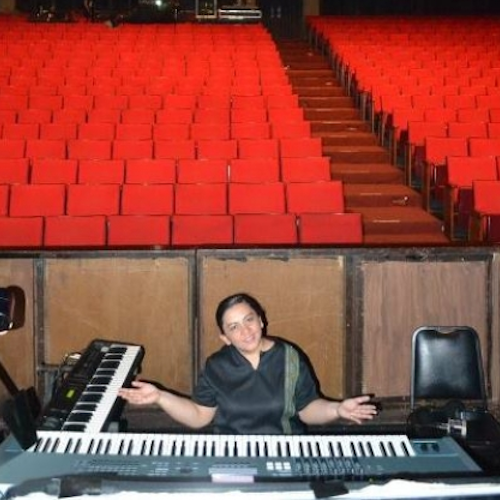
This version of “Sweet Georgia Brown” was arranged by Tunescribers team member Gina R.

Tunescribers team member Gina R.

Participate in the Tunescribers Customer Survey

Before you go, we have a small favor to ask. We’d love to hear from you about your experience with our service and website. Your feedback helps us improve.

As a thank you, every respondent who provides their email address, and who responds on or before 6 May 2024, will receive a unique 15% off discount code for their next Tunescribers order.

Participate in Survey

Categories
Main

Free Sheet Music Giveaway, April 2024

“The Old Rugged Cross” by George Bennard

“The Old Rugged Cross” is a popular gospel hymn written by American evangelist George Bennard between 1912-13. Famed American gospel composer, Charles H. Gabriel, contributed harmonies.

Performed in 6/8 time at a moderately slow tempo, the hymn pays adoration to Christ and his sacrifice at Calvary, where he was crucified. Some of the lyrics are of a dark nature (“the emblem of suffering and shame”), but the uplifting chord structure and later lyrics (“where His glory forever I’ll share”) end the hymn on a positive note.

Typically sold for $9.99, the sheet music for “The Old Rugged Cross” by George Bennard is FREE in April 2024. This arrangement is for solo piano and based on this performance. Grab your free copy today!

CLAIM FREE SHEET MUSIC

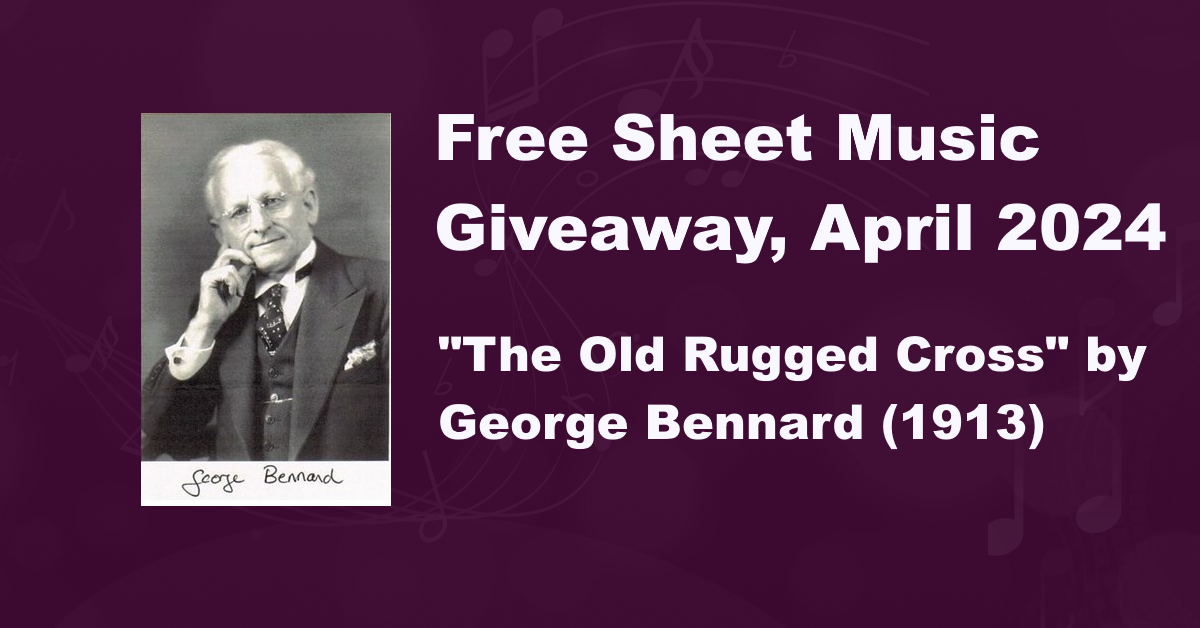
American preacher and hymn composer George Bennard

Fun Facts About “The Old Rugged Cross” by George Bennard:

  • After publication in 1915, the hymn was disregarded by most major hymnals until the 1950s – after American singer and songwriter, Ernest Tubb, published an album of the same name in 1952.
  • The hymn has been covered by a diverse range of recording artists, including Al Green, Chet Atkins, Patsy Cline, Loretta Lynn, John Prine, Ronnie Milsap, and many more.
  • George Bennard sold the rights to the hymn in 1917 for $50 (or $500), receiving a final payment of $5,000 for renewing the copyright 28 years later.

This song was transcribed by Tunescribers team member Ranita B.

Tunescribers team member Ranita B.

Categories
Main

Free Sheet Music Giveaway, March 2024

“I Am the Very Model of a Modern Major-General” by Gilbert and Sullivan

An iconic patter song written for the 1879 comic opera The Pirates of Penzance, “Major-General’s Song” is one of the most famous (and parodied) pieces by the theatrical partnership of W.S. Gilbert and Arthur Sullivan.

Sung by the character Major-General Stanley near the end of Act 1, the lyrics fancifully boast about his knowledge in subjects like art, mathematics, and history, while admitting he has scarce military acumen.

The song is notably difficult to perform due to the fast tempo and tongue twisting nature of the lyrics. In rapid succession, singers must string several multi-syllabic words together, with long stretches of no punctuation.

Typically sold for $15.99, the sheet music for “Major-General’s Song” is FREE during March 2024. This arrangement is for piano and vocals. Claim your copy today!

CLAIM FREE SHEET MUSIC

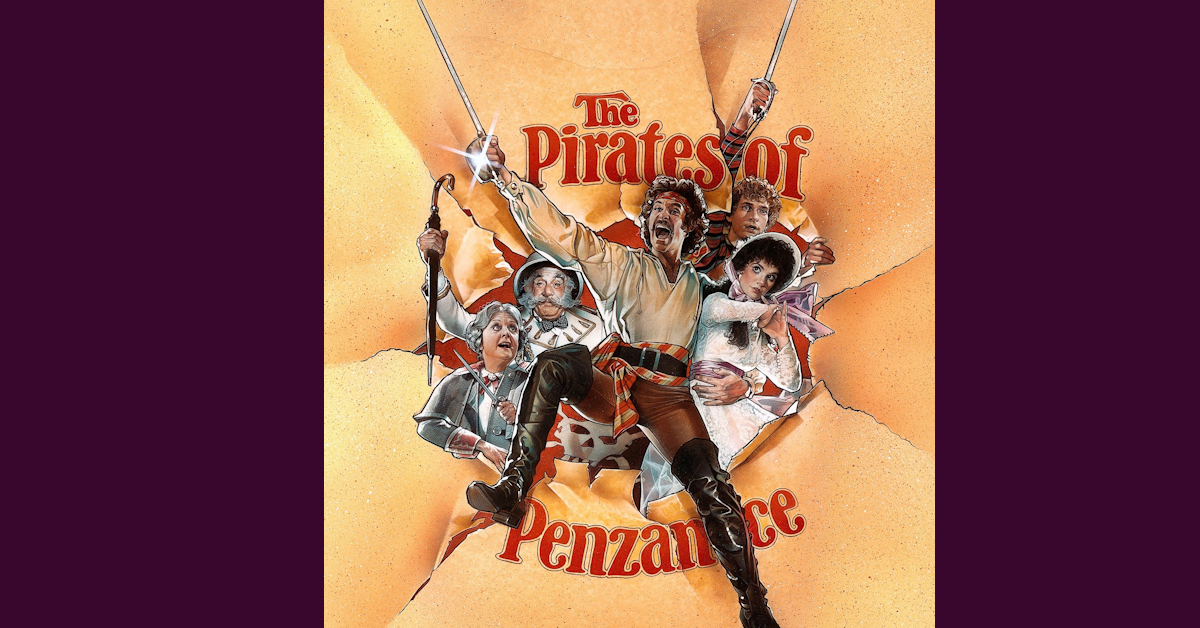
Promotional art for the 1983 film adaptation of The Pirates of Penzance

Fun facts about “Major-General’s Song” by Gilbert and Sullivan:

  • Biographer Michael Ainger claims the inspiration for the song came from Gilbert’s uncle-in-law, General Henry Turner, who Gilbert disliked.
  • The song has been parodied numerous times in popular culture, from film and television to video games and books. “The Elements” by Tom Lehrer is based on “Major-General’s Song” but the lyrics recite the names of chemical elements.
  • In the 1983 film adaptation of The Pirates of Penzance, the song incorporates contemporary references, where the Major-General sings, “Man, I’m older than The Beatles, but I’m younger than The Rolling Stones.”

This song was transcribed by Tunescribers team member Danisa A.

Tunescribers team member Danisa A.


Categories
Main

Free Sheet Music Giveaway, February 2024

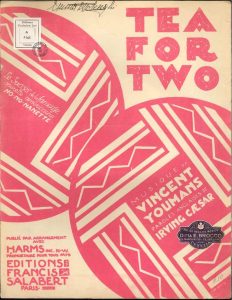
“Tea for Two” (1924) by Vincent Youmans and Irving Caesar

“Tea for Two” is a song composed by Vincent Youmans, with lyrics by Irving Caesar.

Youmans wrote the basic melody for the song while he was in the navy during World War I. But he didn’t finish it until 1924, when he was asked to provide additional songs to help revitalize the failing musical comedy, No, No, Nanette. The show then became the biggest musical comedy of the 1920’s.

“Tea for Two” is one of Youmans’s most popular songs, appearing in every live production and film adaptation of No, No, Nanette. It has been covered by artists like Ella Fitzgerald, Nat King Cole, and Frank Sinatra. Chinese pianist, Yuja Wang, often plays it as an encore during her live performances.

Typically sold for $15.99, the sheet music for “Tea for Two” is yours FREE during February 2024. This arrangement is for solo piano and based on this performance. Grab your copy today!

When you place an order, you will get two versions of “Tea for Two”: a full transcription, and a slightly simplified version. 

CLAIM FREE SHEET MUSIC

"Tea for Two" by Vincent Youmans and Irving Caesar

Fun Facts About “Tea for Two”:

  • Tea for Two” is sung by the romantic lead in No, No, Nanette. The lyrics are about two lovers who envision being married together.
  • Russian composer, Dmitri Shostakovich, won a bet by arranging the orchestration for “Tea for Two” by memory in under an hour. His exact time was 45 minutes.
  • Irving Caesar wrote the lyrics in a hurry, intending to change them later. But Youmans loved the first draft so much, he kept them for the final version.

The sheet music for “Tea for Two” was transcribed by Tunescribers team member Wei Fung F.

Tunescribesr team member Wei F.


Categories
Main

Free Sheet Music Giveaway, January 2024

‘Wade In The Water,’ traditional, performed by Hannah Robinson

‘Wade In The Water’ is a traditional spiritual folk song of unknown origin but was performed by the African American jubilee during the mid-to-late 19th century. While the timing and origin of the song is unknown, the lyrics for it were published in 1901 in a book called New Jubilee Songs as Sung by the Fisk Jubilee Singers. The book was published by Frederick J. Work and his brother John Wesley Work Jr., a musicologist at the historically black college, Fisk University, Nashville, Tennessee.

The Fisk Jubilee singers were established in 1871 at Fisk University. At first, they toured and performed to raise funds for the university, but soon began incorporating traditional slave songs into their repertoire. It is believed the group became associated with the Underground Railroad, a secret network of routes and safe houses to help slaves escape captivity, but this has never been proven.

Typically sold for $12.95, the sheet music for ‘Wade In The Water’ as performed by Hannah Robinson is FREE for the month of January 2024. This version is arranged for solo piano and vocals. It is based on this performance and is a cover of the Eve Cassidy version. Download your copy today!

DOWNLOAD FREE SHEET MUSIC

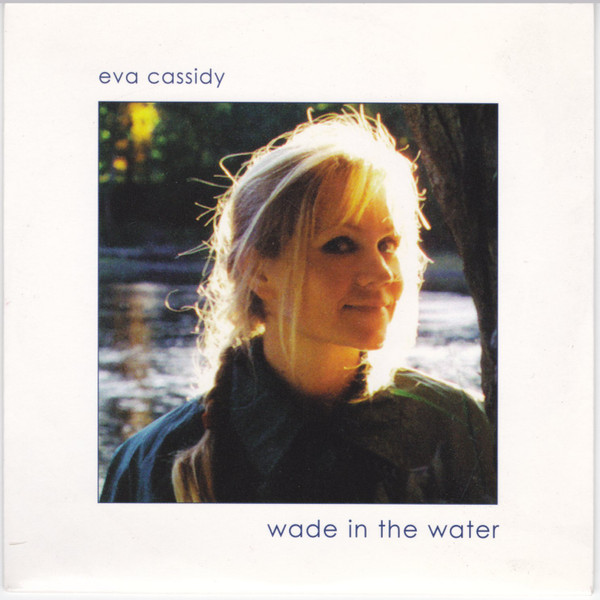
'Wade in the Water' by Eva Cassidy

Here Are Some Fun Facts About ‘Wade In The Water’:

  • It is believed that Harriett Tubman sung this song to African American slaves escaping captivity, instructing them off the trail and into the water to avoid their pursuers.[1]
  • The first commercial recording of the song was performed by the Sunset Four Jubilee Singers and published by Paramount Records in 1925.
  • The song has been covered by numerous artists over the years, including Bob Dylan, Eve Cassidy, The Staple Singers, and more. It is also a standard among the current-day Fisk Jubilee Singers formation.
  • Since the original publication of the lyrics in 1901, which included just a few lines, subsequent publications have added variations to the lyrics, with new lines such as “Wade in de water, children” and “I’m er wading, I’m er wading in the water, chillun.”

This version of ‘Wade In The Water’ was transcribed by Tunescribers team member Michael F.

Tunescribers team member Michael F.

[1] http://www.harriet-tubman.org/songs-of-the-underground-railroad/


Categories
Main

Limited Time Offer on Custom Sheet Music and Backing Track Orders

Use Code 2024 To Receive 24% Off Custom Sheet Music and Backing Track Orders

To help ring in the new year, we’re excited to announce an exciting discount on all custom sheet music and backing track orders.

Between January 1 and 7, you’ll be eligible to receive 24% off your custom sheet music and backing track orders. Simply place your order as usual, and then enter code 2024 to redeem your discount.

This offer is strictly limited to the first week of January between the 1st and 7th.

Use code 2024 at checkout to save 24% on all custom sheet music and backing track orders between January 1 and 7.


Categories
Main

Free Sheet Music Giveaway, December 2023: “River” by Joni Mitchell

Free Sheet Music Giveaway, December 2023

“River” by Joni Mitchell

Inspired by her recent breakup with singer-songwriter Graham Nash and new relationship with James Taylor, Joni Mitchell’s “River” is a solo piano ballad that first appeared on her landmark 1971 album Blue.

While performing the song live in London in 1971, Mitchell described the song as, “… very sad. It gets you in a kind of melancholy before the Christmas spirit.” Indeed, the song was many connections to the holiday season; Mitchell wrote it just before Christmas in 1970, and the lyrics reference people gearing up to celebrate (“They’re cutting down trees/putting up reindeer/singing songs of joy and peace”). Even the piano accompaniment closely follows the 19th century Christmas song “Jingle Bells.”

Today, “River” is one of Joni Mitchell’s most popular and celebrated songs. It is her second-most recorded song (behind “Both Sides, Now”). And in 2021, it was ranked No.247 in Rolling Stone’s “Top 500 Best Songs of All Time” list.

Typically sold for $12.95, this song is yours FREE during December 2023. It is arranged for solo piano and based on this performance. Download your free copy of the sheet music for Joni Mitchell’s “Blue” today!

Download free sheet music

Album artwork for Joni Mitchell's 1971 album 'Blue'
Joni Mitchell’s 1971 album ‘Blue’

Fun Facts About “River” By Joni Mitchell:

  • There are 432 recordings of the song by various performing artists, with covers by Barry Manilow, James Taylor, Sam Smith, and Ellie Goulding.
  • While the song is not directly about Christmas (the events of which merely take place at the same time), it has nonetheless become a popular Christmas standard, appearing on various Christmas music compilation albums.
  • The song was never officially released as a single, but it did appear on the 1971 album Blue, which is widely regarded as Mitchell’s finest album and one of the greatest albums all of time.

This song was transcribed for solo piano by Tunescribers team member Joanne V.

Tunescribers team member Joanne V.
Categories
Main

Free Sheet Music Giveaway, November 2023: ‘The Girl From Ipanema’

Free Sheet Music Giveaway: November, 2023

‘The Girl from Ipanema’ (1964) by Antônio Carlos Jobim and Vinícius de Moraes

Originally composed for Blimp, an incomplete musical comedy about a Martian who visits Rio de Janeiro during the Carnival of Brazil, ‘Garota de Ipanema’ (‘The Girl from Ipanema’) was written by Antônio Carlos Jobim (with Portuguese lyrics by Vinícius de Moraes). The first commercial recording was in 1962 by Brazilian singer Pery Ribeiro. The main source of inspiration for the lyrics was Heloísa Eneida Menezes Paes Pinto, a then-seventeen-year-old girl living in Ipanema. While visiting the Veloso bar-café, Jobim and Moraes would often see her stroll down the street, as well as enter the bar to purchase cigarettes for her mother.

Following the success of the Brazilian release, an English-speaking version of the song was recorded by Jobim, João Gilberto (Brazilian guitarist, singer, composer), and Stan Getz (American jazz saxophonist). João’s wife, Astrud Gilberto, volunteered to sing, on the account of her being a fluent English-speaking Brazilian. Despite not being a professional singer, her soft, breathy vocals gave the song a unique flavour. Her singing style would later influence artists such as Suzanne Vega (particularly the 1996 song ‘Caramel’) and Sade.

Originally sold for $9.95, the sheet music for ‘The Girl from Ipanema’ by Antônio Carlos Jobim is yours free this month. This transcription music is for solo piano and based on this performance. Download your free copy today!

DOWNLOAD NOW FOR FREE

Single artwork for 'The Girl From Ipanema'

Fun facts about ‘The Girl from Ipanema’ by Antônio Carlos Jobim and Vinícius de Moraes:

  • It is one of the most recorded popular songs in history, behind ‘Yesterday’ by the Beatles and ‘Summertime’ by George Gershwin.
  • Astrud Gilberto never received credit or royalties for her part, but she did enjoy a 40-year career as a singer and songwriter.
  • Artists that have covered the song include Frank Sinatra, Ella Fitzgerald, Elaine Elias, and the Oscar Peterson Trio.
  • In 2004, the Library of Congress added it and fifty other songs to the National Recording Registry.

Tunescribers team member Wei Fung F transcribed this song for solo piano. 

Tunescribesr team member Wei F.

Categories
Main

Free Sheet Music Giveaway, October 2023

Free Sheet Music Giveaway, October 2023

“All of Me” by Gerald Marks and Seymour Simons

While the west was experiencing the worst economic downturn of the 20th century, two Michigan-born natives – Gerald Marks (composer) and Seymour Simons (former-research-engineer-turned-pianist, composer, orchestra leader, and radio producer) – were tearing up the charts, with the now-classic song and jazz standard, “All of Me.”

Written and released in 1931, “All of Me” is an upbeat, medium-tempo tune written in B-flat major. American singer and actor Belle Baker introduced the song to the public during a radio broadcast in 1931. Since then, artists as diverse as Billie Holiday, Frank Sinatra, and Willie Armstrong have covered it. It is a common jazz standard, as it is easy to play and great for practicing improvising.

Download your digital copy of the sheet music for “All of Me” by Gerald Marks and Seymour Simons today. Typically sold for $9.95, it’s yours free during October 2023. It is based on this performance and arranged for solo piano.

DOWNLOAD FREE SHEET MUSIC

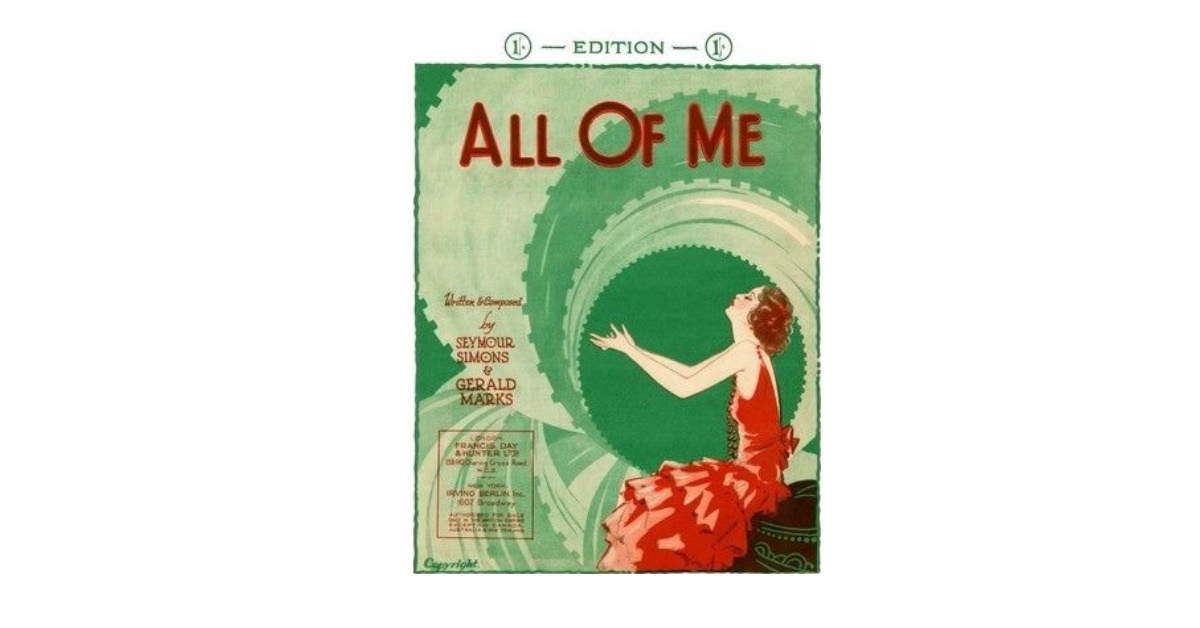
Cover art of "All of Me"

Here are four fun facts about “All of Me” by Gerald Marks and Seymour Simons:

  • In 2000, the Songwriters Hall of Fame awarded “All of Me” the Towering Song Award. Previous award recipients include “Moon River,” “Fly Me To The Moon,” and “Bridge Over Troubled Water?”
  • The original version of “All of Me” has a 20-bar introductory verse but is frequently omitted.
  • “All of Me” is a great introductory song for jazz students, as it contains frequently used chord progressions in the jazz language.
  • Frank Sinatra recorded “All of Me” on four separate occasions, where each recording had a unique interpretation.

This song was transcribed by Tunescribers team member Wei F.

Tunescribesr team member Wei F.

Categories
Main

Choosing the Perfect Music Notation App: A Comprehensive Comparison (Updated March 2025)

Here at Tunescribers, we live and breathe notation software. We have experts in all the major applications available today – but which one is right for you?

With a plethora of options available today, it can be a daunting task to select the perfect tool. To make your decision-making process easier, we’ve compiled a comprehensive comparison of the four leading music notation apps: Sibelius, Finale, Dorico, and Musescore. Each of these apps has its own unique strengths and weaknesses, catering to different needs and preferences.

1.Sibelius: The Industry Standard

Sibelius music notation software

www.avid.com/sibelius


Sibelius has long been regarded as the industry standard for professional music notation (with some notable exceptions). Its robust features and intuitive interface make it a favorite among composers and arrangers worldwide. Here are some of its pros and cons:

Pros:

  • Powerful Customization: Sibelius offers extensive customization options, allowing you to fine-tune every aspect of your score.
  • Professional Sound Libraries: Its integrated sound libraries ensure that your playback sounds as authentic as possible.
  • Mature Platform: Years of development have refined Sibelius into a stable and reliable software.


Cons:

  • Learning Curve: The plethora of features can result in a steep learning curve for new users.
  • Pricing: Sibelius tends to be on the higher end of the pricing spectrum.
  • Subscription Model: The main way to get access to Sibelius is through a subscription plan, not an upfront purchase.


2. Dorico: The Newcomer with Innovation
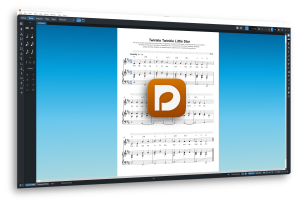
Dorico music notation software

www.steinberg.net/dorico

Dorico, a relatively new entrant, is making waves in the music notation software landscape. Developed by the ex-creators of Sibelius, Dorico aims to combine the best of both worlds.

Pros:

  • Beautiful Defaults: Dorico is known for its aesthetically pleasing default settings, resulting in elegant scores right from the start.
  • Intelligent Input: Its unique input method allows for a natural and efficient way to notate music.
  • Engraving Quality: Dorico‘s advanced engraving algorithms ensure your scores look polished and professional.


Cons:

  • Limited Third-Party Integration: While it’s growing, Dorico‘s third-party integration is not as extensive as other options.
  • Feature Development: Some advanced features available in other apps are still being developed in Dorico.


3. Musescore Studio: The Free and Open Option
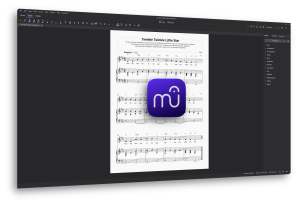
Musescore notation software

www.musescore.org

MuseScore Studio is a popular choice among beginners, educators, and hobbyists due to its open-source license and affordability – it doesn’t get much more affordable than free!

Pros:

  • Free of Charge: MuseScore Studio offers a powerful notation tool without the financial barrier. There is no cost to download or use MuseScore Studio, or any of its features.
  • Community Resources: Its extensive online community provides access to a wide range of user-generated scores and resources.
  • Simplicity: MuseScore Studio‘s user-friendly interface makes it accessible for beginners.
  • Fast updates: The developers of MuseScore Studio are fast to respond to feedback, and the app is getting rapid updates to engraving quality, playback and useability.


Cons:

  • Limited Advanced Features: It may lack some of the advanced features that professionals require.
  • Sound Quality: The default sound library may not be as impressive as those in premium software. We’re pleased to say that as of 2024, this is no longer true! MuseScore Studio has industry leading playback, out of the box.
  • Bugs: As a community led project, there are a number of bugs that sometimes creep in. However, as mentioned above, these are often quick to be addressed!


Finale: The Versatile Classic – Now Dead!

Finale music notation software

www.finalemusic.com

Finale was a veteran in the world of music notation software – before it was discontinued in August 2024. It was known for its versatility and extensive feature set, but sadly, Finale is no more.

Existing users can continue to use it, but it is no longer available to new users, and it will cease to get any updates. Check out this blog post from Tunescribers to learn more.

Collaborative Harmony: Syncing with Your Creative Circle

Finale, Sibelius, Musescore, and Dorico

In the journey of music creation, collaboration plays a pivotal role in shaping your compositions. When choosing the perfect music notation app, a vital consideration is often the compatibility with your creative collaborators. Opting for the same app as those you frequently work with can lead to smoother workflows and harmonious collaborations.

  • Seamless Sharing: By using the same music notation app as your collaborators, sharing and exchanging files becomes effortless, avoiding compatibility issues.
  • Consistency: A shared app ensures consistent notation styles, layout preferences, and playback expectations among team members.

Choosing the same music notation app as your collaborators can streamline communication, enhance teamwork, and lead to more polished end results. Whether it’s your musical team, bandmates, teacher and students, or professional colleagues, aligning your choice of software can create a unified foundation for your creative endeavors.

You might also want to consider using one of the great online notation editors that have been cropping up in recent years.

Remember, our custom sheet music services are here to assist both solo endeavors and collaborative projects. We offer transcription and arrangement services that cater to your unique musical goals. Additionally, we can provide native files for all notation apps upon request, ensuring that you and your collaborators can seamlessly integrate your work across various platforms.

So, while evaluating the array of music notation apps available, consider the power of collaboration in your decision-making process. Select the software that not only resonates with your individual needs but also resonates with the creative hearts of those you collaborate with most closely. Together, you can turn musical ideas into symphonies that inspire and captivate.